


 +1-855-573-2663
 support@secondopinions.com
 Dec 10, 2025

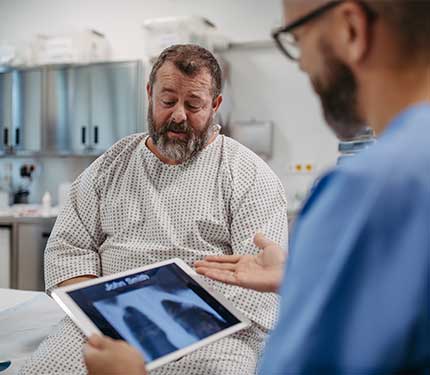
When you receive a lung cancer diagnosis, the weight of that news is overwhelming. In a single moment, you’re faced with understanding medical terminology, evaluating treatment options, and making decisions that will shape your health and future.
Getting a lung cancer second opinion isn’t about questioning your doctor’s skill. It’s about ensuring that you did everything you could to get the right decision, and you can move forward confidently in the medical journey ahead.
A lung cancer diagnosis involves multiple medical specialists working together. Your primary care physician may notice initial symptoms or abnormalities during routine testing and refer you to specialists for further evaluation.
Pulmonologists perform procedures like bronchoscopy and evaluate lung nodules to determine if additional investigation is warranted. Radiologists interpret imaging studies, CT scans, PET scans, and chest X-rays, analyzing the size, location, and characteristics of any findings. Their interpretation forms the foundation for clinical decisions about your care.
Oncologists develop and oversee treatment plans once cancer is confirmed, while pathologists examine tissue samples to identify the specific type of lung cancer: non-small cell lung cancer (NSCLC), small cell lung cancer (SCLC), adenocarcinoma, or squamous cell carcinoma. This information determines which treatments will be most effective.
Studies indicate that diagnostic errors in radiology contribute to a significant portion of missed or inaccurate diagnoses. Studies show that, in retrospective reviews of imaging studies, diagnostic errors can be identified in up to 30% of cases, underscoring the inherent challenges of achieving complete accuracy in radiology1.
It already happened in the past that lung nodules or abnormalities were identified as cancer when they were actually benign conditions, such as infections, inflammation, or scar tissue. This can lead to unnecessary anxiety and potentially invasive procedures for conditions that aren’t cancerous.
Cases of early-stage lung cancer have the potential to be overlooked or dismissed as something less serious. These cases might cause a delay in treatment and have the potential to affect outcomes.
The internet is full of stories about cancers initially classified as early-stage that had already progressed, and others labeled as advanced when they were actually still localized. Since staging directly determines whether surgery, chemotherapy, radiation, or immunotherapy is appropriate, accuracy is essential.
Several factors contribute: differences in radiologist experience and subspecialty training, image quality issues, time constraints as radiologists review hundreds of scans, and the complexity of cases where lung cancer can mimic other respiratory conditions. These are among the most common reasons; however, other potential contributing factors may also exist
When faced with a concerning diagnosis or unclear test results, many people turn to internet searches or AI chatbots for answers. The desire to understand your condition is natural and understandable.
However, these tools have serious limitations when it comes to medical diagnosis:
Google prioritizes content based on clicks and engagement, not medical accuracy for your specific situation. For example, Lung symptoms and imaging findings can indicate numerous conditions.
Without the context of your full medical history, effects of other illnesses and complex clinical conditions, smoking history, occupational exposures, and family background, there is a real possibility that general information on the Internet will not apply to your case.
Tools like ChatGPT, while trained on extensive medical literature, lack human intelligence and, among other things, cannot:
And other considerations that a human can make but a machine can miss
A lung cancer diagnosis could affect every aspect of your life. The treatment path you choose hopefully will impact your recovery, daily functioning, and long-term health. A lung cancer second opinion may serve several important purposes:
A second review may help determine whether the extent of disease has been accurately assessed. More precise staging could potentially guide which treatment options might be appropriate and what outcomes you may reasonably expect.
Oncologists and radiologists who focus specifically on lung cancer may contribute additional insight due to their experience with complex cases and up-to-date knowledge of evolving treatments. Their expertise could highlight details that were not fully appreciated in an initial evaluation.
In some cases, second opinions have been found to suggest less invasive approaches when appropriate, which might help patients avoid unnecessary procedures if alternative options are viable.
In some cases, second opinions have been found to suggest less invasive approaches when appropriate, which might help patients avoid unnecessary procedures if alternative options are viable.
Even when a second opinion aligns with your original findings, it has valuable reassurance, offers peace of mind by helping you move forward with greater confidence and clarity.
Should you get a second opinion for lung cancer? Consider seeking additional expert review if you have recently been diagnosed, if your doctor has recommended major surgery or intensive treatment, if your cancer staging is unclear, or if you have questions about your proposed treatment plan.
A second opinion is particularly valuable if your initial evaluation was performed by a general radiologist rather than a subspecialist in thoracic imaging, if you have been given a poor prognosis and want to ensure all options have been explored, or if a previously identified lung nodule that was considered benign has changed in size or appearance.
Online second opinion services have made it possible to access specialized expertise regardless of your location. The process begins with gathering your medical records, including radiology reports, pathology results if biopsies have been performed, and imaging studies in DICOM format.
You submit these materials through a secure, HIPAA-compliant platform that connects you with board-certified specialists in pulmonology, oncology, or radiology. Within several days, a specialist reviews your complete case and provides a written second opinion addressing your diagnosis, staging, and treatment options.
Online second opinion services typically provide comprehensive reviews within 2 to 5 business days.
For most lung cancer cases, the few days required for a second opinion will not affect treatment outcomes.
No. You have the right to seek a second opinion at any point in your care. Most physicians support patients in obtaining additional expert input.
Differing opinions provide an opportunity to have both specialists review their findings. Additional testing or a third opinion may be helpful. You will have more complete information to guide your decision-making.
Yes. Specialists can thoroughly review imaging studies and medical records remotely, providing detailed written assessments without requiring in-person visits.
At SecondOpinions.com, we connect you with board-certified specialists who provide comprehensive reviews of lung cancer diagnoses and imaging studies. Access the expert clarity you need to make informed decisions about your care.
[1] Zhang L, Wen X, Li JW, Jiang X, Yang XF, Li M. Diagnostic error and bias in the department of radiology: a pictorial essay. Insights Imaging. 2023 Oct 2;14(1):163. doi: 10.1186/s13244-023-01521-7. PMID: 37782396; PMCID: PMC10545608.

Our website content is posted for informational purposes only. It is not intended to be used for primary diagnoses-making and should not replace a consultation with a professional health care provider. If you have any health issues or complaints, please consult your primary physician. Healthcare data provided for informational purposes is not an alternative to an in-person physician consultation.
This website is an informative site that aims to offer its users find helpful information regarding a second opinion services that will be suitable for their medical condition. The content provided in this website is not and shall not be taken as expert or professional medical advice for any matter and is not an alternative to an in-person physician consultation. Our services are different from the diagnostic service typically provided by a physician, as the physicians do not have the benefit of information that would be obtained by examining you in person, observing your physical condition, or conducting diagnostic testing to the specifications of the physician. Therefore, the physician may not be aware of facts or information that would affect the physician ́s medical opinion of your condition. In some cases, these facts may be critical to the opinion. USARAD is not responsible for potential errors in opinion resulting from missing, incomplete, poorly translated or illegible records, or poor-quality images