


 +1-855-573-2663
 support@secondopinions.com
 Jun 17, 2026

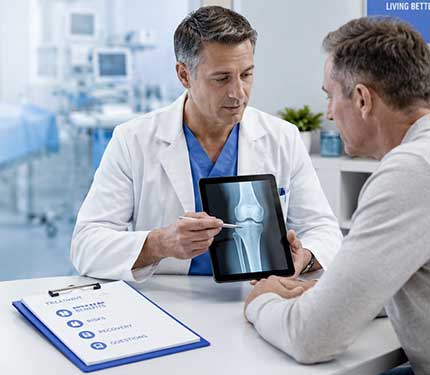
A lot of patients want to know if orthopedic surgery is high risk when they’re told that they’d need a surgery (knee replacement, spine procedure, shoulder repair, joint reconstruction). Every surgery has a risk, so that’s a reasonable question; however, the answer actually depends on several factors: diagnosis, age, medical history, surgeon expertise, and whether or not non-surgical options were completely considered before considering the surgical option.
For patients who want to have clarity prior to making a significant life-changing decision, Second Opinions offers access to expert medical reviews to help patients better understand their treatment options. Their platform allows patients to have more insight and understanding of the procedure before making a commitment to have treatment done.
Orthopedic surgery encompasses procedures with respect to bones, joints, muscles, ligaments, and/or the spine. The risk is very different among most procedures.
There are many procedures that fall within the low- to moderate-risk categories, such as arthroscopy, minor ligament repair, or outpatient hand surgery. In contrast, the higher complexity of the procedure may include spinal fusion, joint replacement, or trauma reconstruction.
The following factors will impact whether you have high risk or not as an orthopedic surgery candidate:
Most patients who have knee or spine surgery will seek knee surgery second opinion or second opinion spine surgery because an orthopedic surgeon may may help patients better understand potential risks and treatment options by determining better ways to plan for surgery or also through alternative treatments.
Giving every patient time to gather information before having surgery is the focus of Second Opinions. Patients are provided with an independent consultation with an experienced orthopedic surgeon before undergoing any type of surgical treatment so that they can make an informed decision about their treatment.
Among other benefits to using the Second Opinions service are the following:
Patients who want to find out how they can get a second opinion on their orthopedic injury surgeries frequently use the Internet as a means to obtain timely and diverse expert opinions.
Second Opinion Vs Competitors
|
Feature |
Second Opinions |
Typical Local |
General Referral |
|
Independent Expert Review |
Specialist-focused review |
Varies by clinic |
Limited consistency |
|
Convenience |
Online process |
In person visits needed |
Mixed |
|
Record Review Depth |
Detailed case based review |
Time limited consult |
Variable |
|
Support For |
Additional information to support patient |
Depends on provider |
Moderate |
|
Value For Patients |
Additional information to support decision-making |
Local only perspective |
Mixed outcomes |
Orthopedic procedures are not always high risk. However, there is no one-size-fits-all as far as the amount of risk associated with your procedure. It is best to understand your unique situation before proceeding. Second Opinions offers patients the benefits of additional specialist review and information, as well as providing clarity in possible treatment options and additional information to support treatment decisions. An informed review may help patients better understand their treatment options.
Is Orthopaedic Surgery High Risk?
No. Many procedures are routine and safe when performed for the right reason by qualified specialists.
Is Spine Surgery Riskier Than Knee Surgery?
It depends on the condition, complexity, and patient health rather than body part alone.
How Fast Can I Get Expert Guidance?
Digital review services are often faster than waiting for multiple in person appointments.
Information provided through Second Opinions is intended to support patient understanding and discussion with treating healthcare providers and should not be relied upon as a substitute for in-person medical evaluation or clinical judgment.

Our website content is posted for informational purposes only. It is not intended to be used for primary diagnoses-making and should not replace a consultation with a professional health care provider. If you have any health issues or complaints, please consult your primary physician. Healthcare data provided for informational purposes is not an alternative to an in-person physician consultation.
This website is an informative site that aims to offer its users find helpful information regarding a second opinion services that will be suitable for their medical condition. The content provided in this website is not and shall not be taken as expert or professional medical advice for any matter and is not an alternative to an in-person physician consultation. Our services are different from the diagnostic service typically provided by a physician, as the physicians do not have the benefit of information that would be obtained by examining you in person, observing your physical condition, or conducting diagnostic testing to the specifications of the physician. Therefore, the physician may not be aware of facts or information that would affect the physician ́s medical opinion of your condition. In some cases, these facts may be critical to the opinion. USARAD is not responsible for potential errors in opinion resulting from missing, incomplete, poorly translated or illegible records, or poor-quality images