


 +1-855-573-2663
 support@secondopinions.com
 Jul 09, 2026

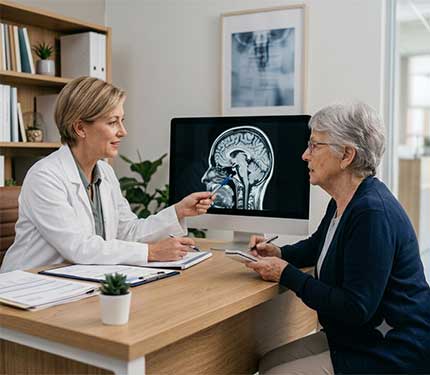
Alzheimer’s disease is one of the most complex neurological diseases affecting millions of families worldwide. When you are diagnosed with Alzheimer’s disease, you will likely feel emotionally distressed and face challenges with medical care (e.g., it’s difficult to find a doctor). Symptom overlap between Alzheimer’s disease and other neurologic conditions such as dementia, vascular cognitive impairment or Parkinsonism can complicate the Alzheimer’s diagnosis process. Therefore, obtaining an accurate diagnosis is essential and many of these individuals choose to seek out a neurology second opinion from a neurologist before solidifying their treatment plan.
Second Opinions offers individuals the ability to connect with specialists who have extensive experience in reviewing medical records, imaging reports and evaluations to help provide an additional expert perspective that may support a more informed understanding of an Alzheimer’s diagnosis. By employing a systematic remote evaluation process, individuals can receive a second opinion neurologist’s insight, regardless of where they live, allowing families to make more informed decisions regarding their care.
An Alzheimer’s diagnosis is typically made by completing a full neurological examination that considers cognitive decline, memory, and any behavioral changes. Doctors will usually use different types of clinical assessments in combination with some type of imaging technology (for example, an MRI or PET scan) and neuropsychological evaluation to determine whether or not somebody has Alzheimer’s disease.
As there can be early symptoms of Alzheimer’s that may look like those seen in other types of cognitive impairment, neurologists will often recommend consulting a neurologist second opinion to review the original assessment and provide an additional clinical perspective. The second opinion neurologist will generally conduct a thorough review of your medical history, imaging studies, laboratory tests, and cognitive assessments to determine if your prior assessment meets the diagnostic criteria established by the field of neurology.
Some of the more common components of an Alzheimer’s diagnostic evaluation are as follows:
Obtaining a neurology second opinion helps ensure that complex neurological data is interpreted correctly, which may help identify potential discrepancies or alternative interpretation and improving long‑term care planning.
Second Opinions built a platform to offer patients a pathway to experienced neurologists, including subspecialists in neurodegenerative diseases for a review of their diagnoses. They serve patients that are looking to confirm an Alzheimer’s diagnosis or seek clarity when a diagnosis is uncertain.
Second Opinions uses a structured review process with all cases reviewed by a dedicated second opinion neurologist with deep experience in neurodegenerative disease.
Key strengths of second opinions include the following:
Through this model, patients can obtain an objective neurologist second opinion that complements the evaluation provided by their primary healthcare provider.
Traditional consultation models restrict patients to local specialists or their hospital networks. Though these providers have valid expertise, patients can lack access to subspecialists in neurodegenerative disease.
Second Opinions expands the diagnostic ecosystem by enabling patients to receive a second opinion neurologist review from experts who focus specifically on neurological disorders such as Alzheimer’s disease.
Key differences between traditional consultation and the second opinions model include the following:
This approach helps families gain confidence in an Alzheimer’s diagnosis before proceeding with long‑term care strategies or therapeutic interventions.
| Feature | Second Opinions | Traditional Healthcare Pathways |
| Specialist Access | Global neurologists specializing in cognitive disorders | Limited to local networks |
| Diagnostic Review | Comprehensive case review by a second opinion neurologist | Typically a single physician evaluation |
| Convenience | Remote medical evaluation | In‑person appointments required |
| Time to Insight | Streamlined digital review process | Potential long wait times |
| Diagnostic Confidence | Independent expert review to support diagnostic understanding | Often limited confirmation pathways |
Family members may desire validation of the Alzheimer’s diagnosis before agreeing to long-term Alzheimer’s treatment appointments. A neurology second opinion can reinforce the clinical findings, and check that other relevant neurologic findings substantiate the diagnosis.
Second Opinions connects patients to neurodegenerative disorder experts who can give you information that you might not always get through general neurological consultations.
A more accurate diagnosis allows families and caregivers to explore treatment options, types of supportive care, etc., and what long-term management might look like.
Helps Identify Potential Diagnostic Differences
Some neurological conditions mimic Alzheimer’s symptoms. A neurology second opinion may help highlight differences between Alzheimer’s disease and other cognitive disorders.
Patients who receive an initial Alzheimer’s diagnosis often pursue a second opinion neurologist evaluation to confirm accuracy and eliminate uncertainty.
When symptoms don’t match up with a single diagnosis, consulting with a neurologist second opinion can provide more clinical perspective.
Caregivers managing progressive neurological conditions often rely on neurology second opinion services to better understand disease progression and treatment options.
Caregivers of those with progressive neurological disorders frequently wish for more insight into how to plot treatment considerations. Neurology second opinion services assist in that understanding.
“Patients who have limited mobility or access to specialized care may benefit from remote expert review services. . Individuals with limited access to specialized neurologists, through the Second Opinions partnership, obtain a remote specialist assessment.
A second opinion is intended to provide an additional clinical perspective and is not a substitute for diagnosis, treatment, or medical advice provided by a patient’s primary physician. All medical decisions should be made in consultation with a licensed healthcare provider.
An Alzheimer’s diagnosis would be made after a neurological exam, memory and cognition tests, medical history, and potentially brain imaging techniques. One generality is that certain patterns of memory loss and cognitive decline suggest that Alzheimer’s disease is underlying.
A neurologist second opinion analyzes medical records, imaging results, lab tests, and neurological assessments to determine whether the initial diagnosis aligns with established neurological guidelines.
A second opinion neurologist analyzes medical records, imaging results, lab tests, and neurological assessments to determine whether the initial diagnosis aligns with established neurological guidelines.
An Alzheimer’s diagnosis has many severe (both medical and emotional) implications. This makes it important that an accurate diagnosis be made. Because neurological conditions can be complex, and because symptoms may overlap with other diseases, a neurology second opinion can provide additional perspective and clarity regarding your diagnosis.
Second Opinions provides patients and their families with access to experienced specialists who thoroughly evaluate all clinical data and neurological evidence. With an independent assessment of their condition by a second opinion neurologist, patients can proceed with greater confidence regarding their diagnostic and treatment decisions.

Our website content is posted for informational purposes only. It is not intended to be used for primary diagnoses-making and should not replace a consultation with a professional health care provider. If you have any health issues or complaints, please consult your primary physician. Healthcare data provided for informational purposes is not an alternative to an in-person physician consultation.
This website is an informative site that aims to offer its users find helpful information regarding a second opinion services that will be suitable for their medical condition. The content provided in this website is not and shall not be taken as expert or professional medical advice for any matter and is not an alternative to an in-person physician consultation. Our services are different from the diagnostic service typically provided by a physician, as the physicians do not have the benefit of information that would be obtained by examining you in person, observing your physical condition, or conducting diagnostic testing to the specifications of the physician. Therefore, the physician may not be aware of facts or information that would affect the physician ́s medical opinion of your condition. In some cases, these facts may be critical to the opinion. USARAD is not responsible for potential errors in opinion resulting from missing, incomplete, poorly translated or illegible records, or poor-quality images