


 +1-855-573-2663
 support@secondopinions.com
 Jul 07, 2026
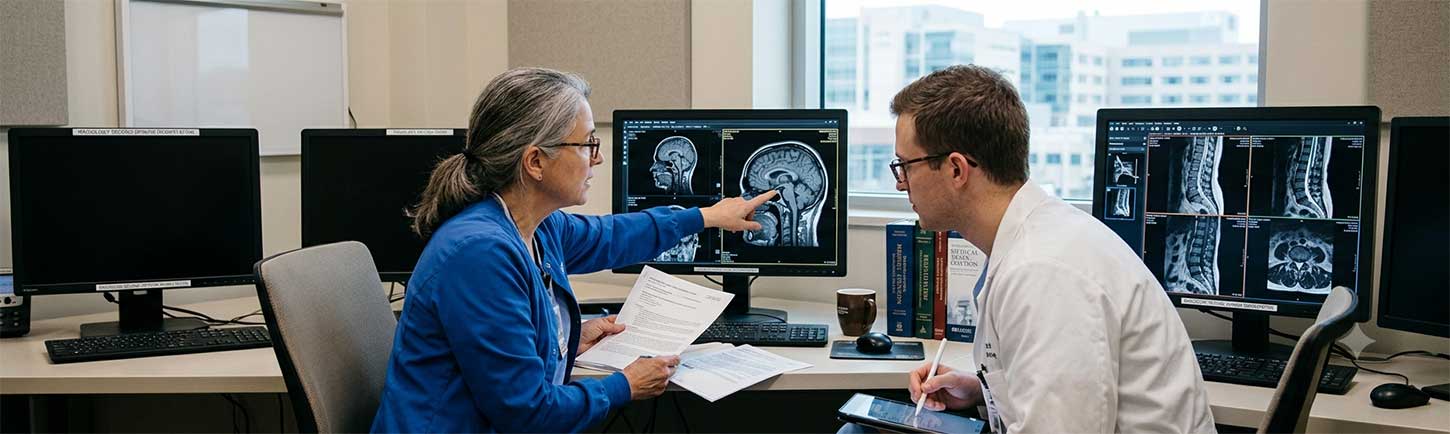
Research has found that having a second review of images can lead to the discovery of clinically important variations in how the images are interpreted for a large percentage of cases, especially in more complicated diseases or when the patient continues to experience symptoms. For this reason, it is common for patients to look for a second opinion when more certainty is needed regarding their options for treatment.
A second opinion on MRI results will not replace your primary care physician’s treatment plan. Rather, it is meant to give you an extra opinion from another expert that could either affirm or provide alternatives to your primary care physician’s diagnosis of your condition.
A second opinion MRI reading is a re‑evaluation of your MRI images by a different radiologist or subspecialist. This process focuses on the same set of images but may include:
Because MRI interpretation can involve nuanced image patterns, a second review can sometimes offer additional perspective.
Patients seek a second opinion on MRI results for several common reasons:
In many cases, radiology second opinions are used as a supportive step in the broader care journey.
| Situation | Why a Second Look Might Help | What You Can Gain |
| Unclear diagnosis | Imaging findings are not definitive | Additional interpretation context |
| Persistent symptoms | Symptoms continue despite treatment | Reassessment of imaging findings |
| Major treatment decisions | Surgery or long‑term therapy is proposed | Greater confidence before proceeding |
| Rare conditions | Limited familiarity with condition | Specialist subspecialty insight |
| Personal reassurance | Desire for added certainty | Peace of mind and informed discussion |
This framework highlights common scenarios where a second opinion MRI may be considered.
Second Opinions provides patients with a digital and accessible way to get an independent MRI reading from an expert via our digital platform. Patients will:
The complete process can be completed online, allowing patients easy access to radiology second opinions services without the need for travel.
A typical radiology second opinions report may include:
The purpose of this report is to support your conversation with your primary physician, and it is not a substitute for their medical advice.
The report does not establish a definitive diagnosis or treatment plan.
It is common for patients to question the safety and legitimacy of an online second opinion service. To ensure a reputable second opinion provider, look for secure upload systems, use of board certified radiologists, and structured reports when working with that provider.
However, it is essential to understand the following:
A second opinion MRI reading may offer several potential benefits:
A second opinion MRI reading is an independent review of your MRI images by another qualified radiologist to provide additional interpretation.
You should consider getting a second opinion on MRI results if the findings are unclear to you, if you’re still having symptoms, or if you’re going to need to make any important decisions.
Radiology second opinions are performed by qualified specialists and are intended to provide additional expert perspective alongside your primary care team.
A second opinion may provide additional perspective on the diagnosis, but the clinical management strategies should always be made with your physician.
A second opinion MRI reading is a simple way to get additional expert eyes on your images. Whether you’re facing a confusing diagnosis, persistent symptoms, or an important treatment choice, a second pair of eyes could shed light on the situation and substantiate important discussions with your physician.
At Second Opinions, secured, completely digital solution to receive radiology second opinions, empowering patients to get additional medical opinions while retaining control of their decisions.

Our website content is posted for informational purposes only. It is not intended to be used for primary diagnoses-making and should not replace a consultation with a professional health care provider. If you have any health issues or complaints, please consult your primary physician. Healthcare data provided for informational purposes is not an alternative to an in-person physician consultation.
This website is an informative site that aims to offer its users find helpful information regarding a second opinion services that will be suitable for their medical condition. The content provided in this website is not and shall not be taken as expert or professional medical advice for any matter and is not an alternative to an in-person physician consultation. Our services are different from the diagnostic service typically provided by a physician, as the physicians do not have the benefit of information that would be obtained by examining you in person, observing your physical condition, or conducting diagnostic testing to the specifications of the physician. Therefore, the physician may not be aware of facts or information that would affect the physician ́s medical opinion of your condition. In some cases, these facts may be critical to the opinion. USARAD is not responsible for potential errors in opinion resulting from missing, incomplete, poorly translated or illegible records, or poor-quality images