


 +1-855-573-2663
 support@secondopinions.com
 Apr 22, 2026
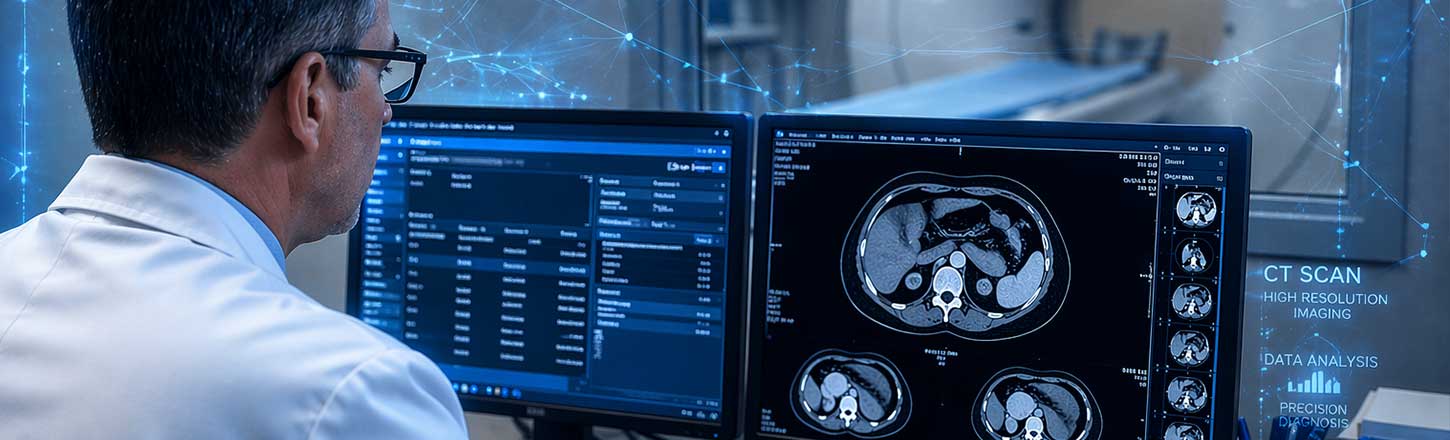
Medical imaging offers essential information for diagnosis; however, it may aid in interpreting this information when a second opinion from a radiologist is available. A second opinion on CT scan results may assist patients in better understanding their findings, clarifying uncertainties, and supporting more informed decisions about their health and treatment options.
Patients may benefit from an additional perspective when reviewing their imaging results if they receive additional input regarding their CT scans, MRIs, or other imaging modalities through second opinions, helping them make more informed decisions about their health and treatment options.
Second Opinions provides patients with secure, digital access to specialist reviewers of their images, allowing them to better understand their imaging results and participate in discussions with their treating physician regarding their care.
Detailed cross-sectional images of bones, organs, and blood vessels are created by a CT scan. Because of the subtle variation in contrast, slice thickness, and reconstruction techniques possible with CT imaging, interpretation can depend on the reader’s subspecialty experience.
When obtaining a second opinion on a CT scan, the focus will be on:
When the findings are borderline, complex, or evolving, this can be especially true.
Patients can seek a CT scan or MRI second opinion if they find they suffer from:
For some, a second MRI opinion may be requested, as well as an MRI interpretation, so there is a more comprehensive view for interpretation that may include both CT and MR results.
| Review Aspect | What Is Evaluated | Why It Matters |
| Image Technique | Slice thickness, contrast use | Affects clarity and detection |
| Anatomical Coverage | Area fully captured in scan | Ensures nothing is missed |
| Comparison Studies | Prior scans if available | Tracks changes over time |
| Clinical Context | Symptoms and history | Improves interpretation accuracy |
| Reporting Detail | Depth of explanation | Supports informed discussions |
This checklist reflects how Second opinion radiology reviews approach CT imaging systematically.
A CT scan second opinion would include:
The purpose of this report is to add to your understanding, and is not intended to replace the clinical judgment or medical advice of your treating physician.
Patients may wonder whether or not digital services are trustworthy. Well-known Second opinion radiology companies will generally use:
Regardless of these precautions, an imaging interpretation should be viewed separately from the rest of the patient’s medical “picture” that the patient’s medical team is managing.
A second opinion via a CT scan provides:
Patients often appreciate having multiple expert interpretations, although results will vary between individual patients.
Depending on the provider, the typical turnaround times can vary, though specific CT scan second opinion services opt to provide their written reports a few days after all files and clinical details have been received.
In order to obtain a second opinion for a CT scan, patients are generally asked to upload DICOM images, the original radiology report, and any associated medical history or referral notes.
The reviewing radiologist can better understand the CT findings through updated symptoms and medical history information because it helps him or her create a more accurate understanding of the patient’s situation.
A radiology second opinion service report serves as a discussion tool between you and your treating physician to determine your subsequent medical steps and make shared treatment decisions.
Obtaining a second opinion on a CT scan can be a useful way to obtain an additional professional perspective of your imaging from another perspective. This can be helpful to patients who are dealing with uncertainty, ongoing symptoms, or major treatment decisions and could help them have better-quality conversations with their healthcare team.
Second Opinions offers a secure and safe online radiology second opinion service that helps make this type of expert review available to all patients while keeping the patients themselves at the center of the decision-making process.
Disclaimer:
The information provided on this page is for general informational and educational purposes only and is not intended as medical advice, diagnosis, or treatment. Always seek the advice of your physician or another qualified healthcare provider with any questions you may have regarding a medical condition or imaging results.

Our website content is posted for informational purposes only. It is not intended to be used for primary diagnoses-making and should not replace a consultation with a professional health care provider. If you have any health issues or complaints, please consult your primary physician. Healthcare data provided for informational purposes is not an alternative to an in-person physician consultation.
This website is an informative site that aims to offer its users find helpful information regarding a second opinion services that will be suitable for their medical condition. The content provided in this website is not and shall not be taken as expert or professional medical advice for any matter and is not an alternative to an in-person physician consultation. Our services are different from the diagnostic service typically provided by a physician, as the physicians do not have the benefit of information that would be obtained by examining you in person, observing your physical condition, or conducting diagnostic testing to the specifications of the physician. Therefore, the physician may not be aware of facts or information that would affect the physician ́s medical opinion of your condition. In some cases, these facts may be critical to the opinion. USARAD is not responsible for potential errors in opinion resulting from missing, incomplete, poorly translated or illegible records, or poor-quality images